-
Olympus 35-SP
There are quite a lot of options available if you’re looking for a 70’s rangefinder. Some good, some bad, some just mediocre. This variety however produces opportunity to find something interesting or “quirky” that may suit your style or at the very least be a lasting memory of someone’s (or some committee’s) inspired design. There is one model however that stands out amongst many. The brilliant Olympus 35-SP.
Built between 1969 and 1976, this compact rangefinder packs in an unrivalled set of features that puts to shame many of even the most modern rangefinders. Its tack sharp 42mm f/1.7 G.Zuiko lens renders pictures with brilliant colour and contrast. The large bright viewfinder contains parallax error indicators and an accurate rangefinder patch. Then there’s the sophisticated metering system.
The Olympus 35-SP has the distinction of being the first ever 35mm rangefinder with dual metering options. Both centre weighted and spot metering is available to the user, which is quite amazing when you consider its age and compact size of the camera. After the SP was produced, Leica included spot metering on the Leica M5 and CL but they were already beaten to the punch, and quite frankly were inferior to the accuracy of the 6 degree spot that came with the SP. Unlike many other rangefinders from that era the light metering works in full manual mode also, which is quite useful when shooting in tricky lighting conditions or if you’re after a specific effect only manual control can produce.Besides a revolutionary metering system, the Olympus SP came with a brilliant lens mentioned earlier. This 7 element 42mm f/1.7 G.Zuiko is regarded as one of the finest rangefinder fixed lenses ever produced. The Olympus RD (which came after the SP) has a similar lens, and although a great camera in its own right it lacked the 7th correcting element. Don’t let anybody try and tell you that they’re the same lens, because they’re in a different league. The SP lens focuses down to about 2.8ft and has a super smooth focusing action with a convenient lever on the side of the barrel. All automatic and manual exposure options are contained on the barrel rings as is the timer. After a while you can adjust these without taking your eye from the viewfinder, but admittedly it will take a little practice.
So with the SP you get a bright accurate viewfinder, unrivalled metering options, one of the best rangefinder lenses ever produced, all squeezed into a tough and compact body that manages to weigh less that comparable rangefinders of that era… What more do you want??
Oh yes, it comes in a (scarce) black finish too, and I was lucky enough to find one 🙂 (picture taken with my homemade light box)
*EDIT: I just got a Silver one also, check out a picture of them together here
-
The Olympus mju:-II (Stylus Epic)
Ok, quick question. How many cameras can you think of that satisfy the below criteria?
- compact
- rugged/all weather construction
- super sharp and contrasty fast lens
- spot metering
- auto focus
- auto film winding
- decent flash with various modes
Thought of any? Ok, now tell me how many of those come in under $20?
Is your list getting smaller? It may even be empty. If you’re lucky though you will still have one camera in mind, the mighty Olympus Mju:II. (The only other camera that might come close is the Konica Big Mini, but they’re more expensive, and I don’t have any experience with them yet).What’s wonderful about this camera is its simplicity and quality. It’s a proper point and shoot that manages to produce wonderful pictures that rival cameras many thousands for dollars more expensive. Don’t believe me? Well just go over to Flickr and check out some sample pictures.
Obviously a great camera doesn’t equal great pictures. But having something so small and inconspicuous will always give you an advantage over something big and obvious. Street photos, architecture, party snaps, the camera can do it all.
Just for the record, this camera isn’t perfect. It has some quirks that can be annoying, such as how it resets settings when you shut it down (for example, it’ll reset the flash mode you selected earlier). Trying to focus through glass can also be annoying but sometimes fixed by focusing to infinity at the sky then re-composing the shot again. Also, selecting spot metering can be fiddly. But the good points far outweigh the bad, And the truth is that this is an amazingly simple, cheap, and compact camera that takes amazing photos. It’s currently my “go everywhere” camera and if you can’t already tell I really enjoy using it. If you’re in the position to get one don’t hesitate, I’m certain you’ll get a lot out of it.* 2020 Edit: So this whole Olympus mju thing really blew up didn’t it. It’s pretty tough finding them for under $20 anymore, but if you’re lucky you can get them for under $100. Honestly though, as great as they are, I don’t think they’re worth the current market prices of $300+. That’s kind of insane.
Some shots from my First Week with the Mju:II
And here’s a Flickr group for the Mju:II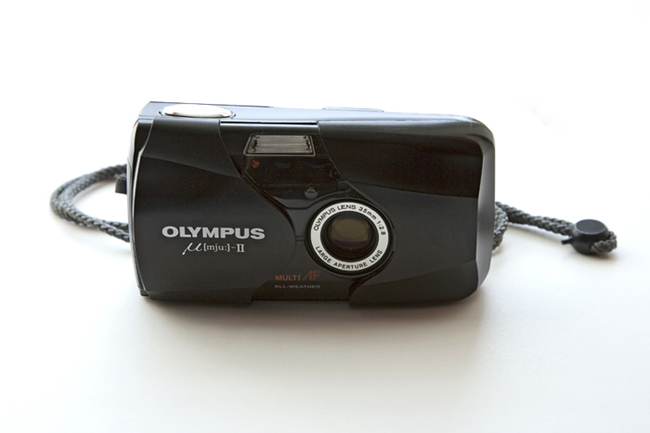
-
Ghetto style light box
Well I’ve been meaning to make one for a while now, and this afternoon I finally did it.
All you need is:
– Cardboard box,
– White paper, tracing paper or white plastic,
– Tape,
– Lights (desk lamps or anything directional).Method:
Simply cut out the sides of your cardboard box. Obviously don’t cut everything, you need to keep the cardboard box as a frame so it’s keeps its structural integrity. Next you just tape the paper to the sides of the remaining cardboard box “frame” making sure to leave one side completely open. By now you should have a box frame with paper attached to all but one side. If so, you’re finished!Well almost. All that’s left is setting up your light sources to point through the paper sides of the box shining in to the object you’ll place inside. The idea is that the paper diffuses the multiple light sources entering the light box creating a soft even light with minimal shadows. It’s best to have the same type of lights on the outside if possible as it helps keep an even white-balance. As you can see my white balances are off as I ended up using 4 completely different light sources, which wasn’t ideal.
I think I got an ok result for a first time test. I need to work on focusing and composition, as well as exposure and controlling the harshness of the lights a bit more.. So basically everything..
I’m looking forward to giving it another go though when I can spend more than 10 minutes setting it all up.
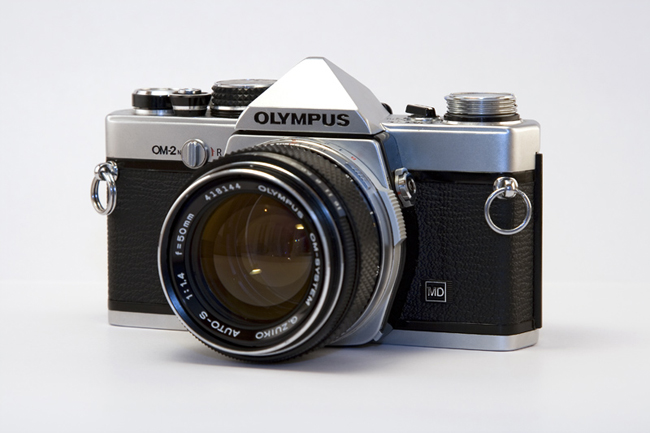
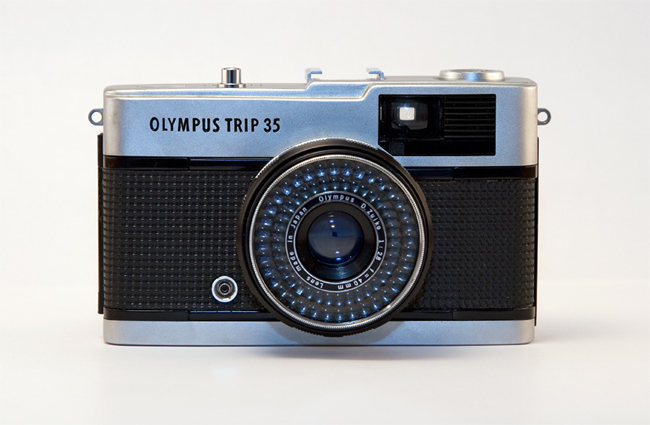
Here are a few of my results so far (yes, the white balance is all over the place).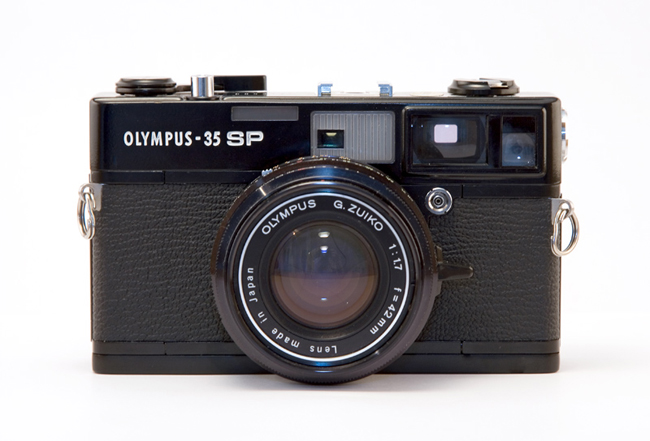

😀

-
Some new Toys..
!!!
Finally, my Olympus 35-SP arrived in the mail! I’ve been loosing sleep over this camera the last week, worrying that it wasn’t going to turn up or get damaged in the post. Now I can breathe a sigh of relief.. It’s home, safe and sound 🙂
Also, by coincidence arrived another Olympus. It probably could be described as bit of an evolution from the mighty 35-SP, the humble little Mju-II (known as the Stylus Epic in other parts of the world). Auto everything with a reasonably fast prime lens. But I’ll give more info about both of thee cameras later on. Right now I’m going to play with them a bit!
Here’s a crappy picture of them below. Oh yeah, my SP is the harder to find black version too 🙂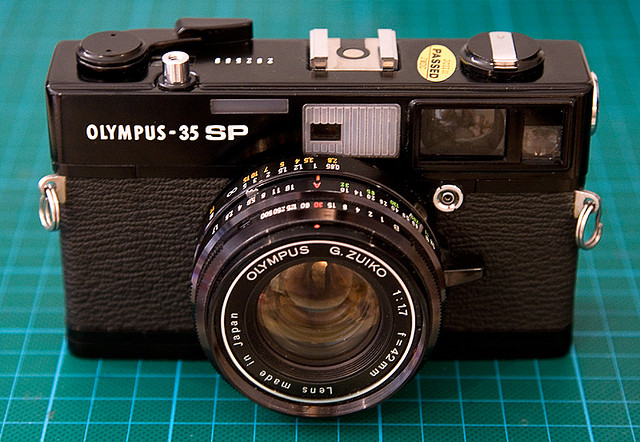
-
Yashica Electro 35 GTN
Yeah, another camera, but this one wasn’t an eBay purchase, and its not an Olympus!
Early this morning I found out about a small, relatively unadvertised Camera Market being held near the city. I was very curious so decided to go along. I’d never been to a camera market before so wasn’t sure what to expect. When I got there i only saw one A3 size photocopied “sign” with “Sydney Camera Market” printed on it. It wasn’t until I walked around a corner and saw a bunch of people waiting to get into a small hall filled with old camera gear that I knew I was in the right spot.
Initial observations were :
– Wow, I’m the youngest person here.
– Sweet, 99% of the stuff here are film cameras/gear.
– Damn, these SLR’s are over priced.
– Awesome, cheap rangefinders!The only downside was that I’m pretty low on money after a couple of other camera purchases last week (more details to come), so I set myself a challenge….
What can I get for $5?Surprisingly there were quite a few choices, some good, some bad. Several Olympus Trips, but I already have 3 of those. Some 90’s auto-focus rangefinders, hmm none of the models I wanted. But then, i saw something out of the corner of my eye that looked interesting. Amongst some dusty old camera cases and scratched up plastic point and shoots i saw this wonderful black Yashica Electro 35 GTN 🙂
It was covered in dust to the extent that I couldn’t even see if the lens had fungus or scratches on it etc. But it looked awesome, was black, and the guy sold it to me for $5.
When I got home I immediately got some cleaning gear out to see if I’d just bought $5 worth of fungus and corroded metal.
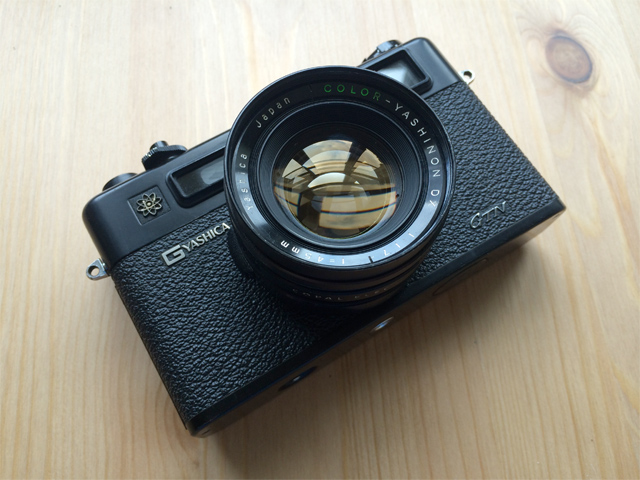
After a couple minutes of cleaning i was so happy to discover that the lens was immaculate with not even the slightest scratch or blemish! The body itself started to clean up really well also, with only some slight signs of wear on the base of the camera, but hardly noticeable. Maybe the layer of dust had managed to form a protective layer over the camera? haha.So anyway, I now own a Yashica GTN is terrific condition at a cost of only $5…. I’m definitely visiting more camera markets in the future! I still need to give it a proper clean, but its a damn good looking camera in my opinion. 45mm f/1.7 lens = happy times and the rangefinder patch seems contrast enough. It feels a little strange at first as it isn’t a need rectangular box like my other rangefinders, but it seems to be very useable. I’ll need to do some more research on them as I’m not too familiar with the Yashica rangefinders.
Here is a quick picture of the beast :
Cant wait until I put a roll of film through it. Unfortunately it’s on bit of a waiting list though, as I have a couple other cameras I’ve been meaning to try out also 🙂