Olympus
-
Olympus M-1
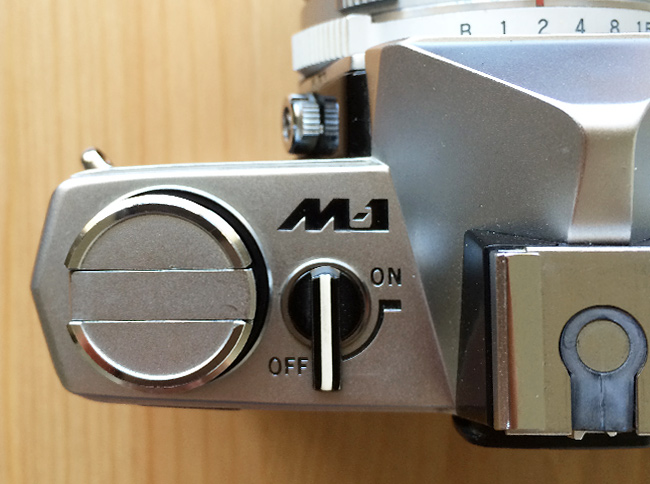
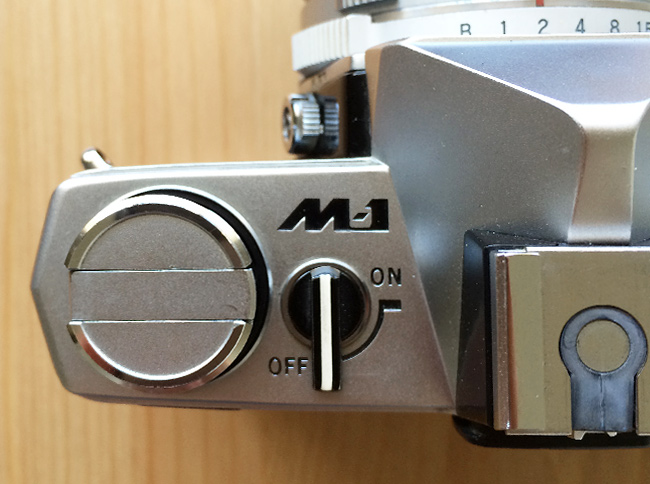
Many think of the OM-1 as the first in Olympus’ range of compact film SLR’s, however there was in fact another model that proceeded it. In July 1972 Olympus introduced the M-1. This new “M system” spearheaded by the legendary Maitani Yoshihisa, introduced a new design philosophy focused on creating compact, mechanical, fully featured professional quality SLR’s unmatched by competitors for decades. They did this my utilising smart design and modern technology, but also by fundamentally rejecting the notion that big and heavy meant quality – a misnomer still often perpetuated to this day. This philosophy began with the exceptional Pen series and concluded with the mighty XA series.
The “M system” had a very large bright viewfinder, quiet shutter, interchangeable focusing screens, accurate in camera metering all wrapped in a compact and well designed ergonomic body. The name also had a striking resemblance to Leica’s range of M mount rangefinder cameras, and for that reason Leica requested it be changed. Olympus agreed out of good will and to avoid confusion as Leica had no trademark on the name at the time (one letter names couldn’t be trademarked). Manufacture ceased in February 1973 and the name was changed to “OM” (Olympus Maitani) as it’s known today. Ironically Maitani was a great fan and long time user of Leica rangefinders, so this request was in a way a sign his new design had made an impact, particularly if Leica felt threatened about the possibility of confusion between the two systems and a need to protect their brand. Olympus’ new SLR had more in common with Leica rangefinders than just the name, their size was also very similar to the early Barnack type Leica and volume very close to that of an M Leica. To fit a pentaprism and TTL meter in a body the same size of a rangefinder was an amazing feat.
Upon release Olympus earned acclaim as manufacturer of the smallest and lightest SLR camera on the market. To achieve this Olympus developed their concept for five years, embracing technical advancements and conducting significant research in to ergonomics. It was only after management broke a design stalemate by giving in to Maitani’s vision did development seriously begin. He had a desire to “miniaturize the camera size but never the size of its button for easy handling“, proven by the fact that it could be operated easily without looking away from the viewfinder. One of the many reasons these cameras are such a pleasure to use and in my opinion superior to anything else of that era.
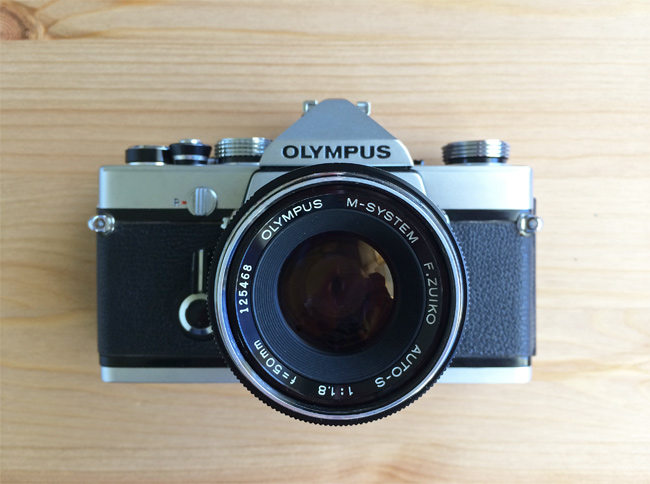
M-1 bodies are quite uncommon but their actual rarity isn’t well established. I bought mine a couple years ago in Japan and from memory they had more than one available for sale. Determining the exact number of cameras released to the public is difficult. Maitani himself said 5,000 cameras were sold and the remaining covers (with M-1 name) were mostly scrapped. However over the years since, researchers have discovered the number may in fact be closer to 50,000 according to serial number records. That said, most early models were sold in Asia and not many made it out before the name change. Over time the M system has naturally spread across the world, however if you have one that was originally delivered outside of Japan you have some something quite rare. I’ve only mentioned bodies so far, but a whole system of lenses and accessories had been designed and were beginning to be manufactured before the name change. This included a 28mm, 35mm, two 50mm’s, a very rare 55mm f/1.2 and some longer lenses ranging up to 200mm. These M system lenses are often rarer than the camera bodies themselves and may of been integrated in to normal OM kits over the years as their uniqueness is less immediately obvious. Make sure you keep an eye out for any lenses that say “M-SYSTEM” like on my camera in the image below, especially if you come across a 55m f/1.2!
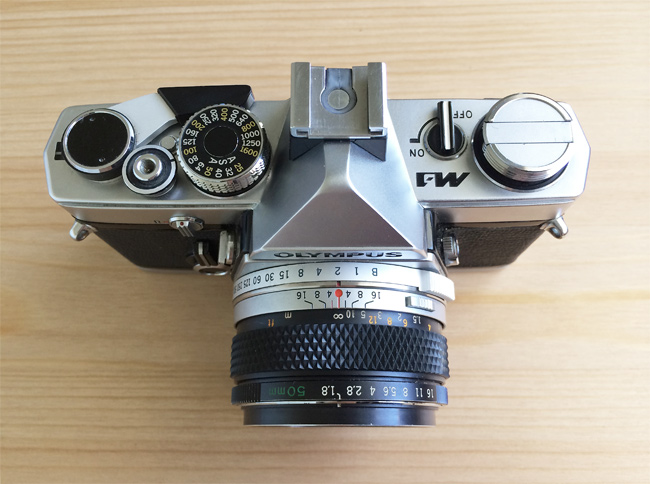
Thinking of buying an M-1? Make sure you take some time to check you have the genuine article before paying a premium. There are a number of external and internal differences you should look out for even if the top plate says M-1 on it. Start by looking at the bottom plate, if there’s a motor drive cover that’s not a good sign as the OM-1 was the first model to accept this accessory. Next you can look under the film pressure plate on the back door of the camera. Here there should be three figures, the first being the plant it was made in and the second two being the year and month of manufacture respectively. We know the M-1 was built until February 1973, so for example if the displayed numbers are “32” it means you have one of the last models made. Lastly you can also look at the face of the lens mount, particularly the three screw heads that are visible. The M-1 used Flat head screws whilst other models used phillips head screws. These tips are just a start and not exhaustive, so make sure you do your research and also get as much information from the seller as possible.
So there you have it, the The Olympus M-1. There’s no good reason to seek one out over the OM-1 as they’re practically the same camera and the meter in the later models can be better. However if you want something a little unusual for those with a keen eye, or have the opportunity to rescue one from an imminent demise then don’t hesitate. They were the starting point of an SLR system that changed an industry, and offered consumers a much needed alternative in a market saturated with uninspired bulky cameras that up until then had no reason to improve and change. If you can’t tell by now I’m a big fan.
“my basic attitude toward designing a camera has always originated from the desire to take a picture. I’ll look for the necessary equipment, and if not available, make one myself“, so Maitani Yoshihisa did.

Further reading :
http://olympus.dementix.org/M-1/
http://www.olympus-global.com/en/corc/history/lecture/lecture2/ -
A whole lotta randoms
Ahh 2011.
2010 was bit of a whirlwind year for a number of reasons, so I’m looking forward to a more enjoyable new year.
To start off the new year I developed an old roll I had kicking around in a camera I don’t use very often. I couldn’t remember what was on it, so it was quite nice looking back over the last year from the perspective of random photos taken roughly over a several month period.
I’m looking forward to completing a couple projects/sets and starting a few more. Things had gotten stagnant for a period, but I’m somewhat relieved that has now changed. Fresh starts all round.Some of these pics were in Melbourne, the others I have no idea.
(As usual, please forgive my crappy scans)


Oh, one more thing.
Came across some youtube videos today. They are from a documentary on Henri-Cartier Bresson and it’s brilliant. I think HCB is often misunderstood and his work over simplified. There is a lot more going on with his work than just “street photography” – a shallow term I’m actually getting a little tired of, as it’s continuously thrown around without much consideration. Anyway, that’s a discussion for another time and place I think.The documentary is broken up into 5 parts so make sure you continue watching them in order. This is the first : http://www.youtube.com/watch?v=r6l09YEeEpI
Hope you enjoy them as much as I did. -
Olympus OM-4 + Bessa Grip
Some months ago I decided to get back into black and white shooting after spending about a year shooting colour on a p&s. It’s always refreshing to have bit of a change, and whilst I don’t make a conscious effort to exclusively shoot on one medium or another, I’ve found that I’ll naturally stick with one or two cameras or types of film unless I make a conscious effort to mix things up a little. Whichever way I “mix things up”, I inevitably find myself returning to the OM series, or one of my rangefinders. I’ve tried other SLR systems over the last few years but they don’t feel as natural as the OM system to me (if you couldn’t already tell by the number of OM’s I have and use).
Anyway, I got this OM-4 for free after the previous owner told me it had electrical problems. It sat on my shelf until earlier in the year when I decided to find out once and for all if it was working. First step was to try and give it bit of a clean – the camera had come from someone who originally lived in the Northern Territory, so it was covered in that distinctive N.T red dirt/dust. I couldn’t see any obvious problems so after sourcing a battery cover from a generous member at RFF, I put a test roll through it and to my surprise everything worked perfectly.
After a few days I was looking at my Bessa R3A and noticed how similar in size it is to the OM SLR’s. From this I eventually discovered that the Bessa grips fits on the OM4 (and others) with ease. The grip is actually a little bit big for the OM-4 (as the Bessa is larger), but it does the job pretty well. The ergonomics of the camera have improved somewhat and it doesn’t stand out visually too much or add any noticeable weight. It’s a bit ghetto I know, but I’m thinking it’ll give me more street cred now haha… Anyway, it was an experiment that worked well. I figured I’d try it after hearing people ask if it’s possible. Yes it is, albeit not perfect, however it does the job!
-
Expired Film
Just like cameras, I hoard film, and for some reason I quite often come across people throwing it out, or shops clearing it off their shelves.
I can’t stand the thought of film being thrown in landfill somewhere when it can be used for something creative or fun. It’s just a waste. So as a result I have quite a lot of it.
Mostly I just load it into one of my mju:II‘s and keep it in the car or in my pocket and shoot anything that come to mind. A lot of the time they don’t turn out, and from the ones that do, only a small number are “keepers”. I’m not really bothered. This “low stress” type of shooting is what got me into photography in the first place. It’s something I lost for a couple years. Instead I’d agonise about the shot I wanted to get, the preparation and post work etc. It became a chore and not enjoyable.
These days I just shoot for the fun of it and the final result isn’t the prime importance. I find it a lot more fun now.Below are some shots from expired film I’ve been using. I’m not even sure what it is. Just some consumer grade Kodak 200 & 400 iso I think. These are some scans of the prints so things aren’t as sharp as they’d be from a negative scan, but I kind of like the aesthetic anyway.
Some shots are from my ongoing A car took me there series.


-
A Car Took Me There
Been doing a lot of driving lately, so it’s only natural that some of my photos are taken from the car. Here are a few from an unfinished set I’ve been working on.
My scanner doesn’t like film anymore, so I have to scan prints – luckily I usually get prints.
I’m gradually going through a large bag of expired colour print film I got for nothing several months ago. It’s been a nice change from black and white, plus I like the random colour casts that can happen depending on the type of film and how its been treated. This unknown factor increases the enjoyment for me personally, even though the occasional shot is lost in the process.