
Reviews
-
Voigtlander Bessa R3A
I only recently purchased a Bessa R3A but it’s already one of my favourite cameras.
For those who aren’t familiar with this model, here is a bit of info about it.
The Bessa R3A is a 35mm film rangefinder camera made by Cosina Voigtlander in Japan. It features both aperture priority and full manual modes (as opposed to the R3M which lacks aperture priority). The camera has a Leica M mount meaning it can use a multitude of Leica and other brand M mount lenses. It can also use the Leica Thread Mount (M39) lenses via an adapter. The camera is constructed of magnesium alloy meaning that it feels very tough whilst only weighing around 400g. The camera has manually selectable frame lines in the viewfinder of 40/50/75/90 (of use full VF for 35mm), with a very sharp and contrasty rangefinder patch. The viewfinder on these cameras are one of its biggest features. It are incredibly bright and a pleasure to use. An added bonus is that the VF has 1x magnification, so everything is life size and using the camera with both eyes open is extremely easy.
The film advance is very smooth and solid, and the shutter button fires off the electronic shutter with just a light touch. Some people complain that the shutter noise is loud with these (well louder than some of the Leica’s). I cant comment on this as I’ve never used a Leia M for an extended period of time, but I can say the R3A’s shutter is quieter than any DSLR, SLR, and any of the many fixed lens rangefinders I have.
When taking photos in aperture priority mode the VF shows up the shutter speed that’s currently selected. If there’s not enough light, or too much light, the speed on the extreme end will flash to warn you. In manual mode it displays both your selected shutter speed and the recommended shutter speed at once (one flashes). This is such a simple system and very easy to get used too. You also get a AE lock activated by a separate button right under your thumb, plus exposure compensation for +/-2 stops via 1/2 stop increments. Shutter speeds are B to 1/2000 sec. (which is what I missed on my older rangefinders with only 1/1000 sec), plus iso 25-3200 by 1/3 steps. All pretty standard these days, but better than what I’ve become used to lately.
I’ve only just started shooting with it but can already tell this is a camera designed for the enthusiast. Everything feels solid, comfortable, and simple to use. Plus the price is only a fraction of a similar spec’d Leica (well, how many can you find with 1:1 VF and Av mode??), whilst being able to take all of its lenses and more.
As you can tell i really like this camera. It combines portability, quality, lens/accessory options, and simplicity in a very affordable package. A perfect introduction into the world of M mount rangefinders and lenses. I’m just worried that I’ve started travelling down a path my wallet will begin to hate me for!Below are a couple pictures I took of it this afternoon. The second one was purely for fun, don’t worry, I’m not trying to take it that serious :p
Camera has the Ultron 35mm f/1.7, side grip, and soft release attached.

You can read some more info here
Plus, I have a hard to find scanned user manual for the R3A/R2A in my Downloads section -
Mr Voigtlander Vito BL
I say “Mr” out of respect because he’s damn old… Well compared to my other cameras anyway.
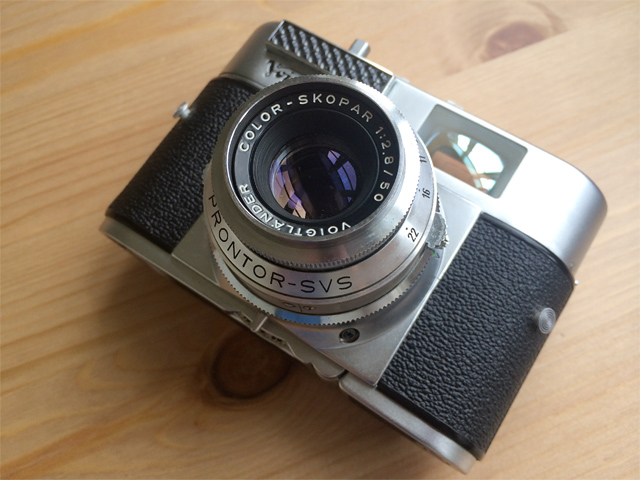
I have acquired yet another camera, it’s a Voigtlander Vito BL which looks like a terrific little thing. They’re not particularly a fashionable camera or have much of a cult following, however from what I’ve read they are regarded very well and produce some quality results. You may say by today’s standard their operation is quite archaic, and it isn’t packed with any advanced features, but it still has a lot going for it. First of all it has a very capable 50mm f/2.8 lens that produces some very distinct and impressive results. Secondly it’s compact and smaller than most of my 70’s rangefinders. Then it has the bonus of not needing batteries as it comes with a selenium light meter. Oh and last but not least, its looks pretty damn good, I’ve already got comments about it and I’ve owned it less than a week.
Its been hard finding specific information about this camera, but there were several models in the Vito series. The BL began construction in 1956 and was based of a previous B model but came with the addition of a Bewi-Automatic Light Meter. Operating the light meter definitely isn’t simple, you need to dial in certain settings then hold down the light meter button to take a reading. If you wanted to take pictures in a hurry using the onboard light meter you’d be in for bit of a challenge. Everything else operates quite simple though, loading film is done like normal, focusing and aperture/shutter speed selections are all on the lens barrel. The ergonomics of the camera seem quite good. It’s compact in width, but relatively tall which means your hands can grip the camera body easily and the shutter button seems to be perfectly under your index finger without having to search for it. The film advance lever is also great as its mostly recessed into the camera body except for the end which sticks out enough for your thumb to grip easily to advance the film. It all just looks so neat and feels well designed and would put many modern cameras to shame.
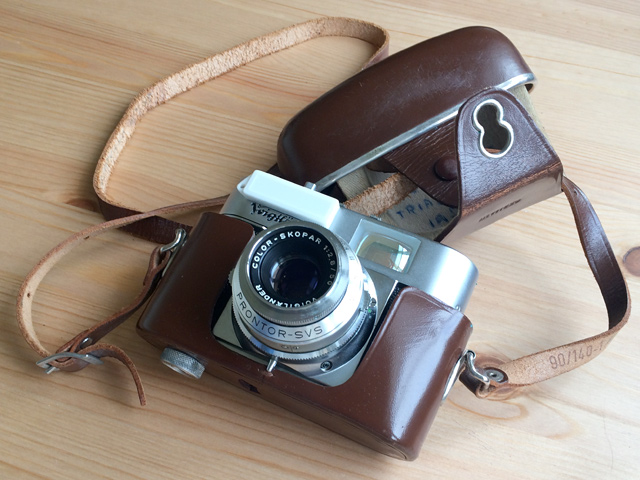
I picked this camera up for literally pocket change and it came with the original leather case, instructions, and what i eventually discovered as a plastic incident light attachment cover for the light meter, I’m sure many have been lost over the years. I was surprised that the camera not only looked close to perfect, but appears to be working perfectly too. I was all prepared to go in and start taking apart the shutter etc but everything works wonderful.
I love cameras like this, small, unassuming, and still functional even after 50 years. I wonder how many consumer goods sold today will be as useful in 50 years time as this little camera is.Below are a few pictures of the little beast. I still haven’t cleaned it yet, but you can see the great condition it’s in.
-
Olympus 35-SP
There are quite a lot of options available if you’re looking for a 70’s rangefinder. Some good, some bad, some just mediocre. This variety however produces opportunity to find something interesting or “quirky” that may suit your style or at the very least be a lasting memory of someone’s (or some committee’s) inspired design. There is one model however that stands out amongst many. The brilliant Olympus 35-SP.
Built between 1969 and 1976, this compact rangefinder packs in an unrivalled set of features that puts to shame many of even the most modern rangefinders. Its tack sharp 42mm f/1.7 G.Zuiko lens renders pictures with brilliant colour and contrast. The large bright viewfinder contains parallax error indicators and an accurate rangefinder patch. Then there’s the sophisticated metering system.
The Olympus 35-SP has the distinction of being the first ever 35mm rangefinder with dual metering options. Both centre weighted and spot metering is available to the user, which is quite amazing when you consider its age and compact size of the camera. After the SP was produced, Leica included spot metering on the Leica M5 and CL but they were already beaten to the punch, and quite frankly were inferior to the accuracy of the 6 degree spot that came with the SP. Unlike many other rangefinders from that era the light metering works in full manual mode also, which is quite useful when shooting in tricky lighting conditions or if you’re after a specific effect only manual control can produce.Besides a revolutionary metering system, the Olympus SP came with a brilliant lens mentioned earlier. This 7 element 42mm f/1.7 G.Zuiko is regarded as one of the finest rangefinder fixed lenses ever produced. The Olympus RD (which came after the SP) has a similar lens, and although a great camera in its own right it lacked the 7th correcting element. Don’t let anybody try and tell you that they’re the same lens, because they’re in a different league. The SP lens focuses down to about 2.8ft and has a super smooth focusing action with a convenient lever on the side of the barrel. All automatic and manual exposure options are contained on the barrel rings as is the timer. After a while you can adjust these without taking your eye from the viewfinder, but admittedly it will take a little practice.
So with the SP you get a bright accurate viewfinder, unrivalled metering options, one of the best rangefinder lenses ever produced, all squeezed into a tough and compact body that manages to weigh less that comparable rangefinders of that era… What more do you want??
Oh yes, it comes in a (scarce) black finish too, and I was lucky enough to find one 🙂 (picture taken with my homemade light box)
*EDIT: I just got a Silver one also, check out a picture of them together here
-
The Olympus mju:-II (Stylus Epic)
Ok, quick question. How many cameras can you think of that satisfy the below criteria?
- compact
- rugged/all weather construction
- super sharp and contrasty fast lens
- spot metering
- auto focus
- auto film winding
- decent flash with various modes
Thought of any? Ok, now tell me how many of those come in under $20?
Is your list getting smaller? It may even be empty. If you’re lucky though you will still have one camera in mind, the mighty Olympus Mju:II. (The only other camera that might come close is the Konica Big Mini, but they’re more expensive, and I don’t have any experience with them yet).What’s wonderful about this camera is its simplicity and quality. It’s a proper point and shoot that manages to produce wonderful pictures that rival cameras many thousands for dollars more expensive. Don’t believe me? Well just go over to Flickr and check out some sample pictures.
Obviously a great camera doesn’t equal great pictures. But having something so small and inconspicuous will always give you an advantage over something big and obvious. Street photos, architecture, party snaps, the camera can do it all.
Just for the record, this camera isn’t perfect. It has some quirks that can be annoying, such as how it resets settings when you shut it down (for example, it’ll reset the flash mode you selected earlier). Trying to focus through glass can also be annoying but sometimes fixed by focusing to infinity at the sky then re-composing the shot again. Also, selecting spot metering can be fiddly. But the good points far outweigh the bad, And the truth is that this is an amazingly simple, cheap, and compact camera that takes amazing photos. It’s currently my “go everywhere” camera and if you can’t already tell I really enjoy using it. If you’re in the position to get one don’t hesitate, I’m certain you’ll get a lot out of it.* 2020 Edit: So this whole Olympus mju thing really blew up didn’t it. It’s pretty tough finding them for under $20 anymore, but if you’re lucky you can get them for under $100. Honestly though, as great as they are, I don’t think they’re worth the current market prices of $300+. That’s kind of insane.
Some shots from my First Week with the Mju:II
And here’s a Flickr group for the Mju:II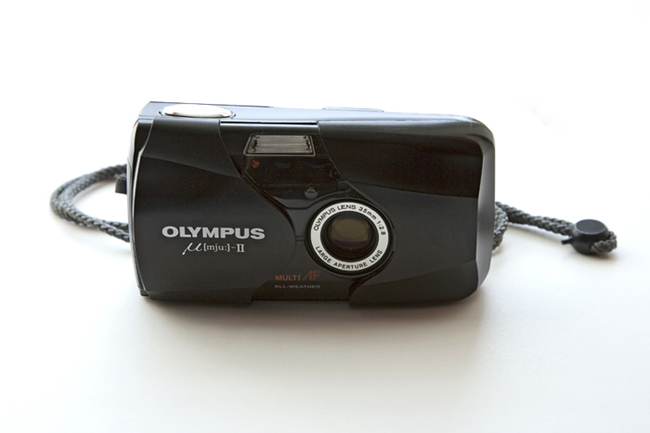
-
Yashica Electro 35 GTN
Yeah, another camera, but this one wasn’t an eBay purchase, and its not an Olympus!
Early this morning I found out about a small, relatively unadvertised Camera Market being held near the city. I was very curious so decided to go along. I’d never been to a camera market before so wasn’t sure what to expect. When I got there i only saw one A3 size photocopied “sign” with “Sydney Camera Market” printed on it. It wasn’t until I walked around a corner and saw a bunch of people waiting to get into a small hall filled with old camera gear that I knew I was in the right spot.
Initial observations were :
– Wow, I’m the youngest person here.
– Sweet, 99% of the stuff here are film cameras/gear.
– Damn, these SLR’s are over priced.
– Awesome, cheap rangefinders!The only downside was that I’m pretty low on money after a couple of other camera purchases last week (more details to come), so I set myself a challenge….
What can I get for $5?Surprisingly there were quite a few choices, some good, some bad. Several Olympus Trips, but I already have 3 of those. Some 90’s auto-focus rangefinders, hmm none of the models I wanted. But then, i saw something out of the corner of my eye that looked interesting. Amongst some dusty old camera cases and scratched up plastic point and shoots i saw this wonderful black Yashica Electro 35 GTN 🙂
It was covered in dust to the extent that I couldn’t even see if the lens had fungus or scratches on it etc. But it looked awesome, was black, and the guy sold it to me for $5.
When I got home I immediately got some cleaning gear out to see if I’d just bought $5 worth of fungus and corroded metal.
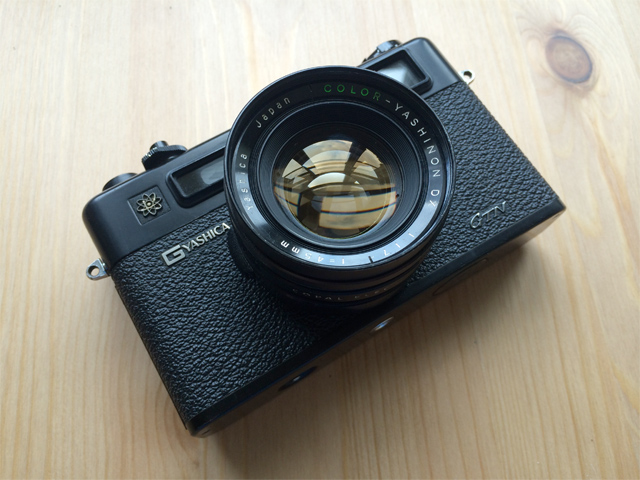
After a couple minutes of cleaning i was so happy to discover that the lens was immaculate with not even the slightest scratch or blemish! The body itself started to clean up really well also, with only some slight signs of wear on the base of the camera, but hardly noticeable. Maybe the layer of dust had managed to form a protective layer over the camera? haha.So anyway, I now own a Yashica GTN is terrific condition at a cost of only $5…. I’m definitely visiting more camera markets in the future! I still need to give it a proper clean, but its a damn good looking camera in my opinion. 45mm f/1.7 lens = happy times and the rangefinder patch seems contrast enough. It feels a little strange at first as it isn’t a need rectangular box like my other rangefinders, but it seems to be very useable. I’ll need to do some more research on them as I’m not too familiar with the Yashica rangefinders.
Here is a quick picture of the beast :
Cant wait until I put a roll of film through it. Unfortunately it’s on bit of a waiting list though, as I have a couple other cameras I’ve been meaning to try out also 🙂

